
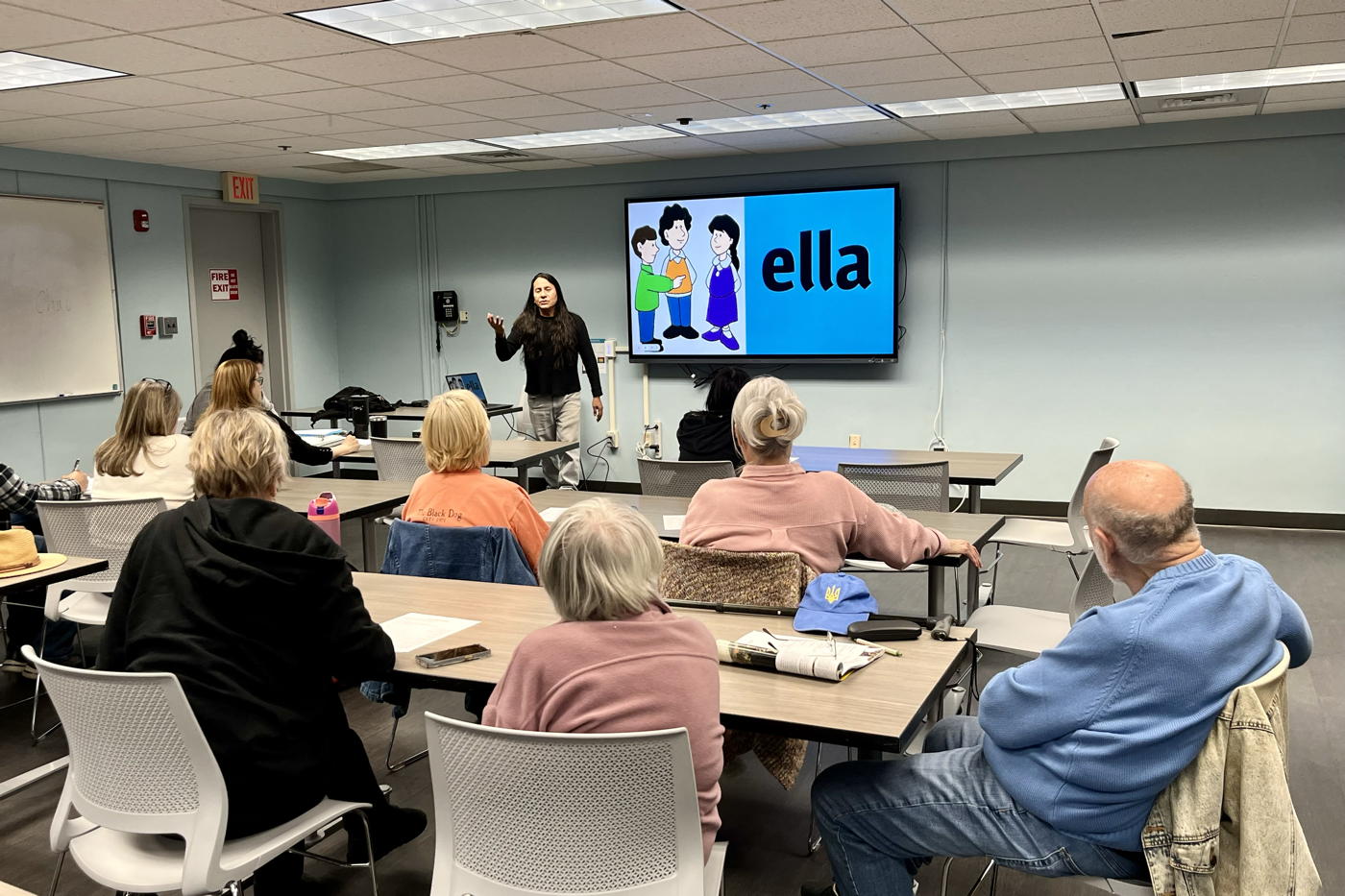
This month’s meetup focused on three different areas. Conversations, Regular Verbs in the Present Tense, and Learning to talk about Necessities. A quick summary of each is given below.
Conversations
Basic conversational skills are important for us to communicate to others. When we are talking to someone who speaks a different language than ourselves, we need to be aware of some of the differences in conversational norms. With Spanish, one of the things we learned is that there are times for formal conversational styles (talking to someone much older than you, higher ranking than you, or meeting someone for the first time) and times for non-formal conversational styles. We were told whenever you are not sure which to use, start with the formal until the person you are talking with indicates that informal is okay to use. We were also given the tip that when you are unsure of things, you can often parrot things back to match the other speaker.
We were again given pronunciation tips for helping our Spanish sound more like native speakers. Many of these tips were a review of things we learned in the past, but we also were given a cool little video to help us learn our vowel pronunciation. That video can be seen below:
Finally, we were given time to practice our skills with a partner. We used the documents found here as our starting points for these interactions.
Verbs
After practicing our conversation skills with a partner, we moved on to verb conjugation of regular verbs in the present tense. We learned how all verbs end in either -ar, -er, or -ir. We learned that you drop that ending when conjugating and replace it with a different ending depending on who is performing the action. Below is a chart showing the different options for regular verbs in the present tense.
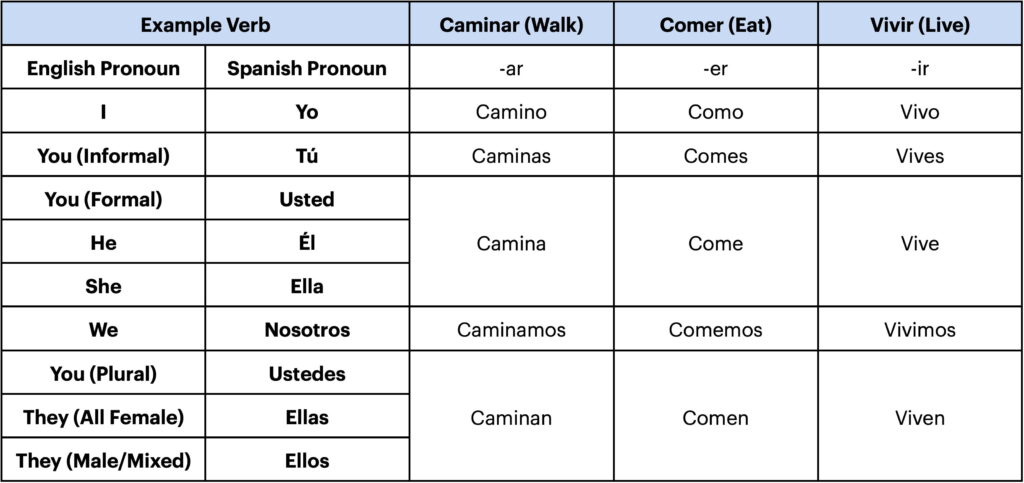
So, “Yo camino” means “I walk”, while “Nosotros caminamos” means “We walk”. The vosotros conjugation was talked about but it was emphasized that is something that is used in Spain an unlikely to be needed in the work we are doing with Immigrants in this country. Here is the slideshow we used to learn this concept.
Basic Needs
Finally, we learned how to say many of the words that we might need to use when dealing with the basic needs of the people we are working with. In addition we learned phrases like “¿Qué necesitas tú?” which means “What do you need?” Below is a chart of the vocabulary words that we learned tonight:
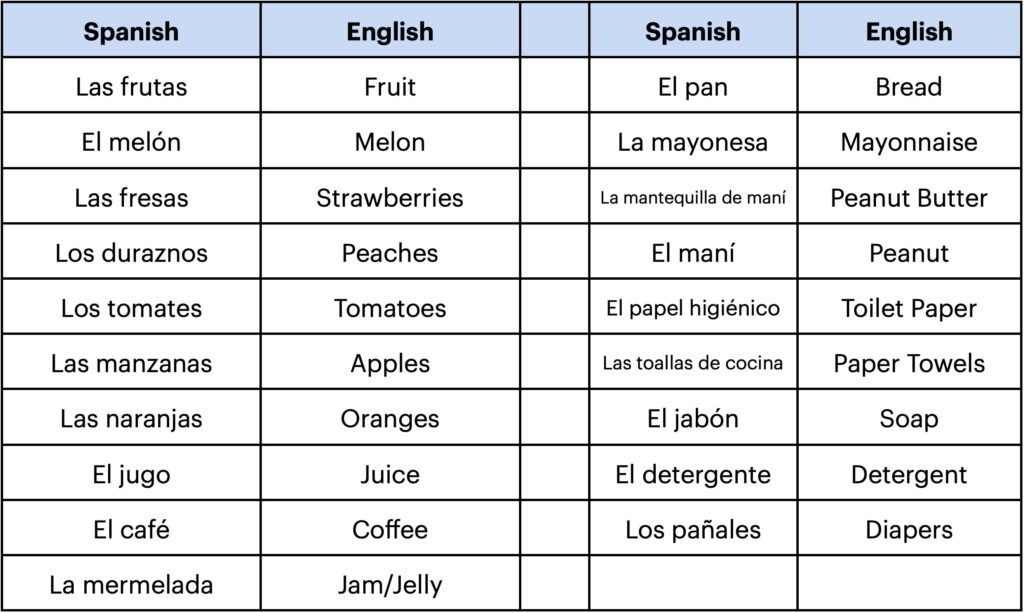
In addition to these basics we learned you could be more specific by adding “de” which means “of or from”. For example “El jugo de naranjas” means “Orange juice”.
Here is a link to the slideshow that was used to teach us these words and here is a picture showing all of the items and the Spanish words for them.